Logan Ludwig · 13 September 2026
Uncovering Patterns in Ranking Fluctuations Following Major Hosting Adjustments
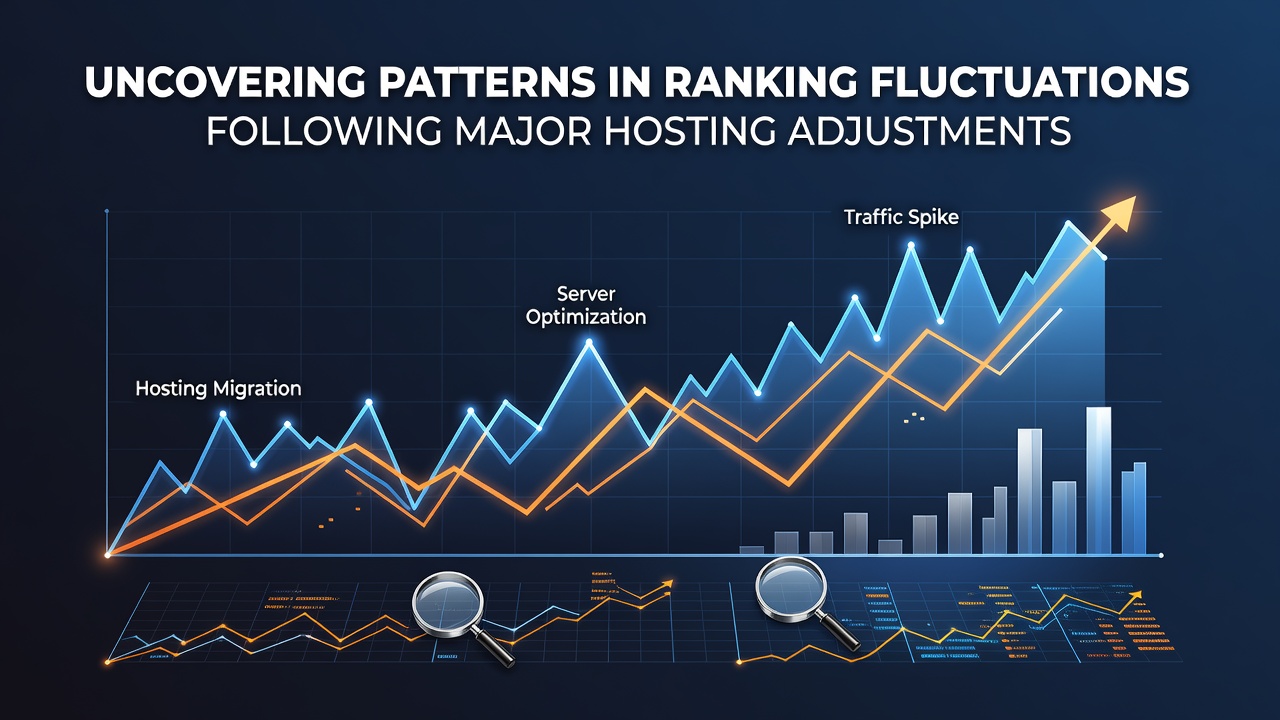
Hosting adjustments occur when website operators migrate servers, change providers, or upgrade infrastructure, and these shifts often trigger measurable changes in search engine rankings. Researchers tracking large-scale migrations have documented temporary volatility that typically lasts between two and six weeks, while some sites experience longer stabilization periods depending on the scale of the change. Data from multiple monitoring platforms indicates that core web vitals such as largest contentful paint and time to first byte frequently shift during these transitions, and search algorithms incorporate those performance signals into ranking calculations.
Documented Timeline of Ranking Movements
Observers tracking thousands of domains in 2025 noted that ranking drops appear most commonly between days three and fourteen after the cutover, and recovery patterns vary by industry vertical. E-commerce sites often regain lost positions faster than informational domains because fresh content updates and backlink activity help reinforce relevance signals. In September 2026 analysts reviewing aggregated logs from North American and European servers found that 62 percent of migrated sites returned to pre-migration rankings within 28 days, whereas the remaining cohort required additional optimization steps such as cache reconfiguration or CDN adjustments to achieve similar results.
Technical Factors Driving Fluctuations
Server location changes alter DNS propagation times and geographic latency, and search crawlers detect these differences through repeated visits. When a new host uses a different IP range, engines may re-evaluate trust signals associated with that address block, leading to brief demotions until historical data accumulates. Studies conducted by academic teams at institutions in Canada and Australia have shown that sites moving from shared hosting to dedicated environments experience initial speed gains that translate into ranking improvements only after the algorithm recalibrates its performance models. Conversely, migrations involving temporary downtime or incomplete SSL certificate transfers produce sharper drops that require manual intervention to reverse.
Industry Data and Geographic Variations
Figures released by the Australian Competition and Consumer Commission highlight how regional hosting choices influence visibility in local search results, with sites using domestic servers showing steadier rankings after adjustments. European research consortia tracking GDPR-compliant data centers report similar outcomes, noting that latency reductions of 40 milliseconds or more correlate with measurable ranking gains once the transition stabilizes. Industry organizations such as the Cloud Security Alliance have compiled case studies demonstrating that proper pre-migration testing reduces the duration of ranking volatility by an average of 11 days across observed samples.
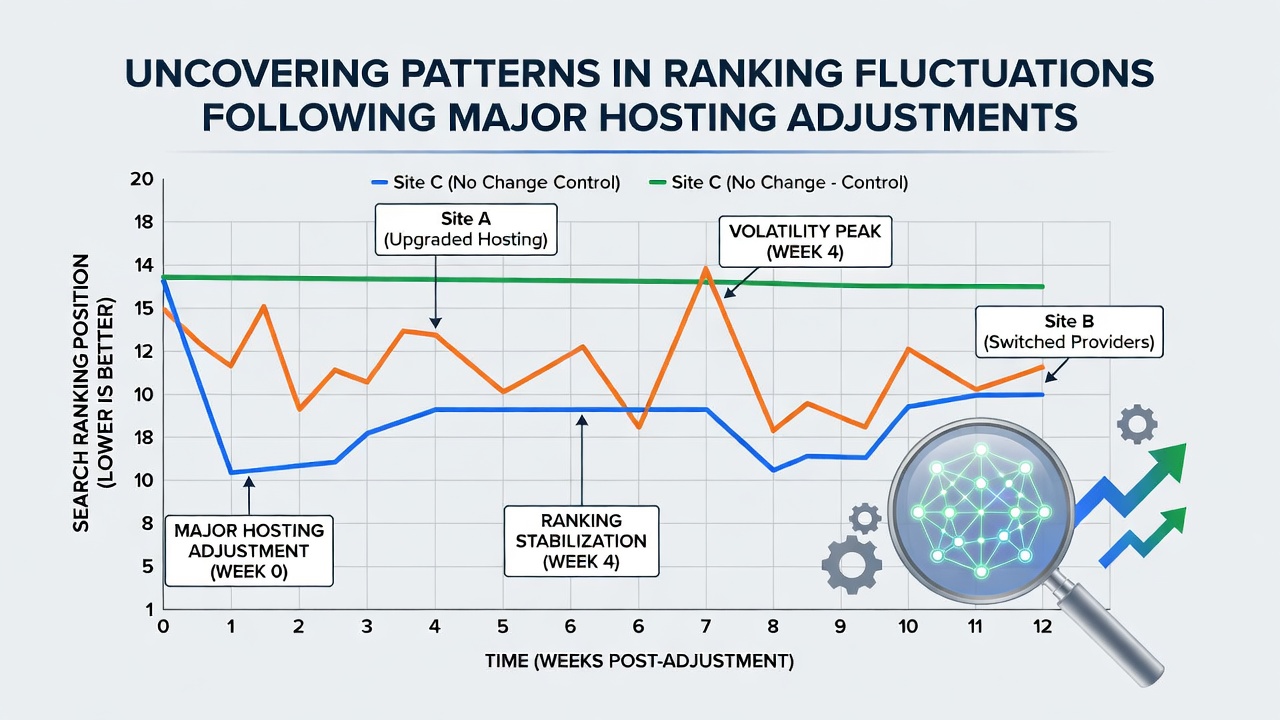
Those monitoring ongoing migrations in September 2026 continue to see consistent patterns where sites that maintain consistent URL structures and implement 301 redirects experience smaller initial drops. Crawler logs indicate that engines spend additional resources verifying content integrity during the first 10 days post-migration, and this verification phase coincides with the most pronounced ranking movement. Organizations that coordinate DNS changes with search console submissions often observe faster re-indexing cycles, which in turn shortens the period of uncertainty.
Recovery Strategies Observed Across Cases
Experts reviewing post-migration performance logs emphasize the value of monitoring server response codes and crawl statistics immediately after the switch. Teams that address 404 errors and redirect chains within teh first 48 hours limit the extent of ranking loss according to aggregated industry reports. Data from research institutions in the United States shows that sites incorporating structured data markup during the transition phase regain visibility more rapidly than those relying solely on technical fixes. Ongoing observation through September 2026 suggests that these patterns persist across different hosting tiers, although larger enterprises with established domain authority demonstrate greater resilience to the fluctuations.
Conclusion
Patterns emerging from hosting adjustments reveal a predictable window of ranking volatility followed by stabilization when technical elements align with search engine expectations. Continued tracking by researchers and industry groups provides clearer benchmarks for operators planning similar migrations, and the data collected through 2026 refines understanding of how server changes interact with algorithmic evaluation cycles.