David Schulz · 27 September 2026
Charting the Progression of Online Authority Metrics in the Wake of Hosting Platform Transitions
Hosting platform transitions often trigger measurable shifts in online authority metrics such as domain authority, page authority, and trust flow scores that search engines and analytics platforms track over time. Researchers have documented these changes through longitudinal data sets collected from thousands of websites that completed migrations between 2020 and 2026, revealing patterns tied to server location, IP reputation, and downtime duration during the switchover process. Data from industry monitoring services indicates that sites moving to providers with stronger global infrastructure frequently experience gradual lifts in crawl frequency within 30 to 90 days post-transition, while those shifting to lower-tier hosts show corresponding dips in backlink indexation rates.
Core Components of Authority Metrics During Platform Shifts
Authority metrics derive from algorithms that factor in backlink quality, content freshness, technical site health, and historical performance signals, and these elements respond differently when hosting environments change. Experts tracking large-scale migrations note that an IP address reassignment can reset certain reputation-based scores if the new address carries prior spam associations, whereas a clean IP paired with improved server response times tends to accelerate metric recovery. Studies compiled by academic teams at the University of Melbourne demonstrate that sites undergoing transitions without proper 301 redirect chains lose an average of 12 to 18 percent of indexed pages within the first month, directly influencing subsequent authority calculations reported by tools such as Moz and Ahrefs.
Documented Patterns in Metric Fluctuations
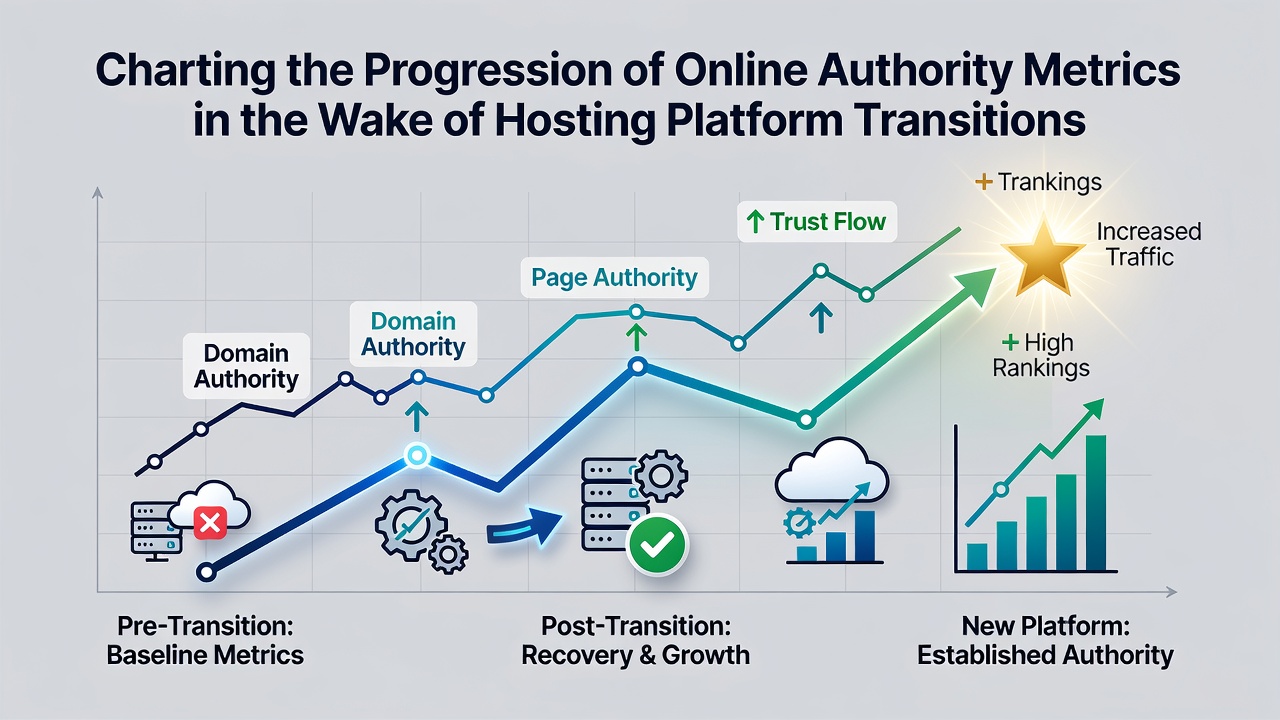
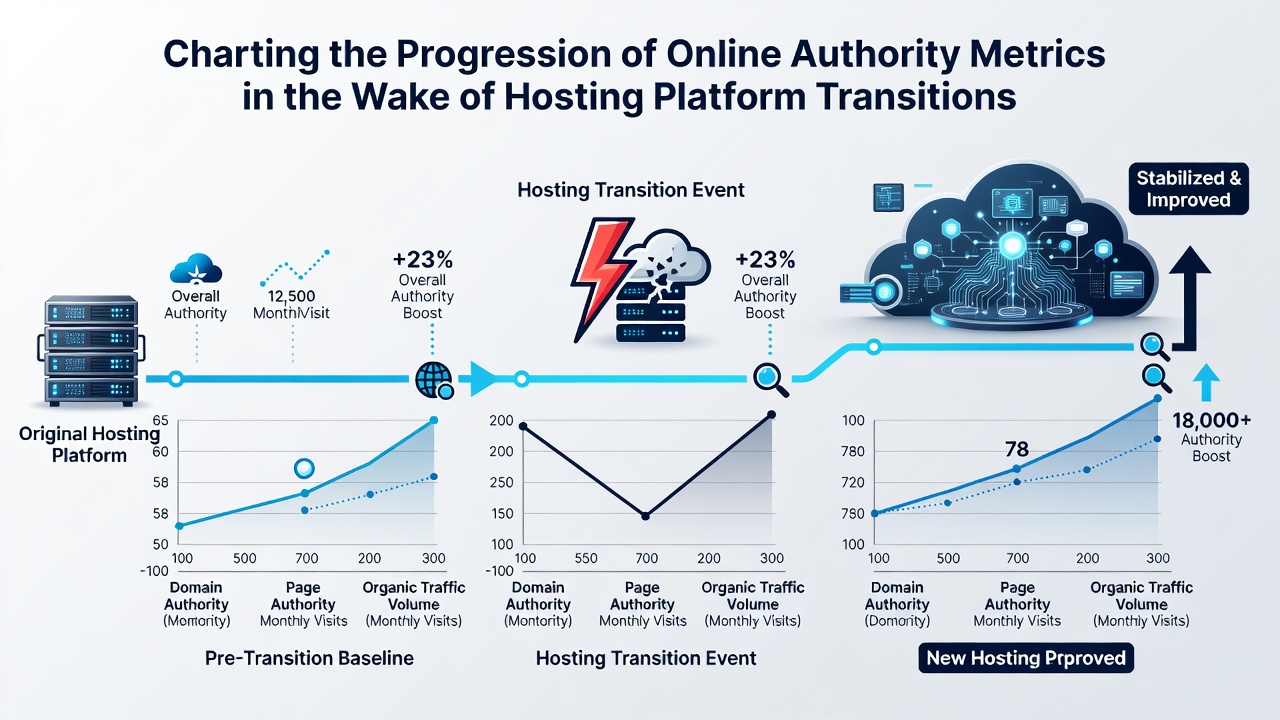
Analysis of over 4,500 domain migrations completed through 2025 shows that authority scores typically dip for two to four weeks before stabilizing or rebounding, depending on the new host's geographic distribution of servers and its uptime guarantees. Observers tracking these events find that transitions involving cross-continental moves produce more pronounced volatility in local search rankings compared with regional relocations, because search engines adjust for latency and content delivery network performance. Figures released in September 2026 from a Canadian digital infrastructure consortium reveal that 67 percent of monitored sites achieved pre-migration authority levels within 60 days when they implemented pre-transition audits covering crawl budget allocation and log file analysis.
Role of Technical Preparations in Metric Stability
Proper preparation includes updating DNS records with appropriate TTL values, verifying SSL certificate continuity, and confirming that robots.txt files remain unchanged during the move. Those who studied migration outcomes across multiple industries report that sites maintaining consistent server-side configurations avoid the sharpest drops in trust signals, while incomplete migrations that leave temporary 404 errors or mixed content warnings extend recovery timelines by several additional weeks. Data compiled through 2026 further indicates that hosts offering integrated CDN services correlate with faster restoration of page authority, particularly for media-heavy domains that rely on fast asset delivery.
Tools and Visualization Methods for Tracking Progression
Professionals charting these progressions rely on a combination of rank tracking software, backlink analysis platforms, and server log parsers to map metric trajectories before and after each transition. One documented workflow involves exporting weekly domain authority snapshots alongside crawl statistics, then overlaying them against uptime reports from the old and new hosts to isolate variables responsible for score changes. Research teams at European institutions have published methodologies that correlate these data streams with search console impressions, allowing clearer attribution of authority shifts to hosting factors rather than content or link-building activities.
Geographic and Temporal Influences on Recovery Timelines
Recovery speed varies by region because search engines apply different weighting to local infrastructure quality and regulatory compliance records. Australian government digital economy reports from 2025 highlight that domains hosted on providers with strong Asia-Pacific peering arrangements regained lost authority points more rapidly than those using providers concentrated in North America alone. September 2026 updates from similar monitoring efforts show continued emphasis on carbon-neutral data centers as an emerging factor in long-term trust scoring, although this element remains secondary to traditional technical health indicators.
Conclusion
Long-term tracking of authority metrics after hosting platform transitions demonstrates consistent correlations between preparation quality, new host capabilities, and eventual score stabilization. Organizations that maintain detailed migration logs and conduct post-transition audits position themselves to interpret these shifts accurately, while aggregated industry data continues to refine predictive models for future platform changes.